- Dr. Abundant of Abundant Institute
- Posts
- The Identity of Money: Why Financial Growth Requires an Identity Shift, Not Just More Income
The Identity of Money: Why Financial Growth Requires an Identity Shift, Not Just More Income
The Identity of Money: Why Financial Growth Requires an Identity Shift, Not Just More Income

Peter Abundant
January 20, 2026

The moment you hear the word money, something happens inside you. Your body reacts before your mind has time to analyze it. Your heart rate may change. Your stomach may tighten. You may feel excitement, stress, hope, or resistance. This reaction alone tells you something important: money is not just a practical tool in your life—it is a deeply charged symbol that is tied to your identity, beliefs, and nervous system .
Money itself has no power. It is neutral. What gives money influence over your life is what you believe it represents: safety, freedom, success, validation, survival, or control. Because money is the primary tool through which you exchange value and create experiences, it becomes a mirror that reflects who you believe yourself to be.
Money Is a Tool, but Identity Determines How You Use It
You already know that money is a tool for exchange. What you may not fully recognize is that money also functions as a spiritual training ground. It pushes you to confront your limits, your fears, and your self-concept.
You want more money, but what you are really being asked to expand is your identity. Financial growth feels uncomfortable because it requires you to exceed the internal threshold you have grown used to. That discomfort is not a problem—it is the signal that growth is happening.
Your body, mind, and nervous system are designed to adapt. Just as the physical body can be trained to do what once seemed impossible, your financial identity can be stretched beyond what currently feels normal. History proves that limits are rarely real. They are simply unchallenged assumptions.
Why Money Growth Feels Difficult at First
Most people agree they want more money, but few consider what must change within them to receive it. Growth feels uncomfortable because your current identity is optimized for familiarity, not expansion. Your ego’s job is to keep you safe, predictable, and consistent—not wealthy, bold, or expansive.
This is why the idea of more money often creates resistance. You are being asked to think differently, act differently, and trust yourself in unfamiliar territory. Without new exposure—new conversations, environments, perspectives, and ideas—it is nearly impossible to imagine new possibilities.
When you expand what you are exposed to, you expand what feels possible. As your exposure grows, your identity evolves.
The Edge of Identity Is Where Possibility Lives
To move into a higher financial reality, you must be willing to reach the edge of your identity. That edge feels like danger, uncertainty, or risk, but it is actually where insight and creativity emerge.
Most people never go there. They stay within the limits of what feels safe and familiar, even if it causes long-term stress. When you stand at the edge, you begin to see opportunities, solutions, and ideas that were previously invisible to you.
Money demands responsibility, foresight, and—most importantly—self-trust. You must trust your ideas enough to explore them, research them, and take them seriously. Many life-changing financial breakthroughs begin as simple impulses that someone decided to act on rather than dismiss.
Ideas Are Signals From Your Future Self
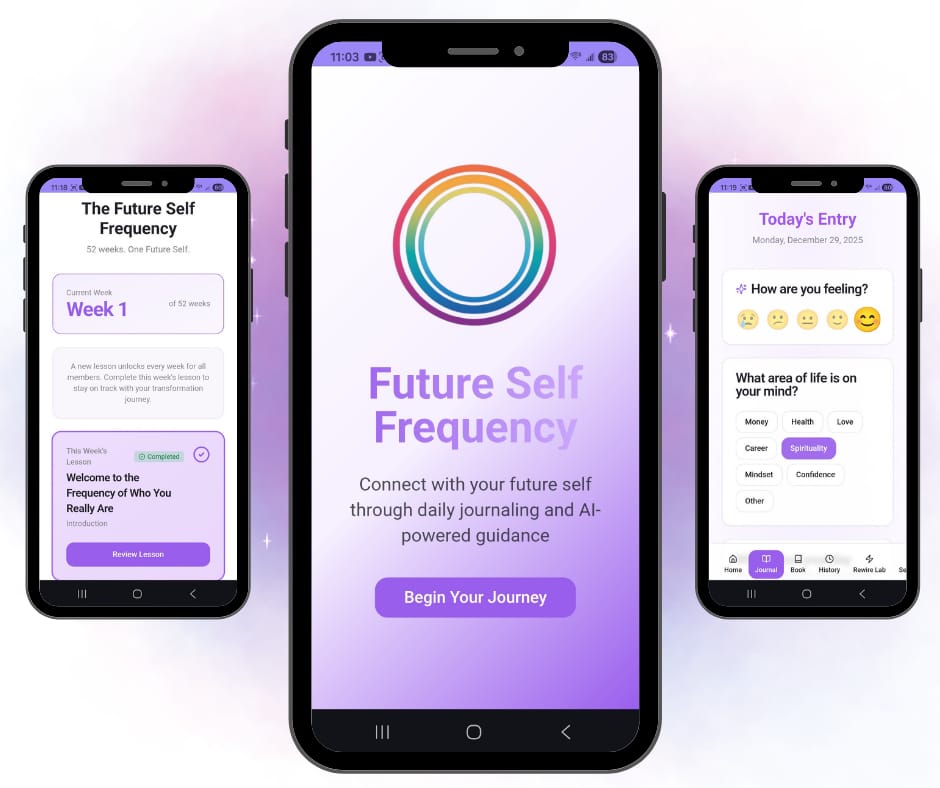
When you receive an idea that could change your life, it did not appear by accident. Desire is a signal from a more expanded version of you. It is your future self communicating direction.
Your ego may immediately dismiss the idea as unrealistic or impractical. That dismissal is not wisdom—it is protection. Instead of shutting ideas down, your responsibility is to investigate them. Research creates clarity. Clarity creates confidence. Confidence allows you to decide wisely rather than reactively.
You do not have to commit to every idea forever. Many people build businesses they later sell, using that one chapter to permanently change their financial trajectory. Your identity is not defined by what you do—it is defined by what you normalize.
Financial Identity Is About Thresholds, Not Jobs
If you only associate money with trading time for income, your financial identity remains limited. Jobs are not the identity. Income thresholds are.
When you normalize earning at a higher level—whether through multiple jobs, a business, or a combination—you train your nervous system to function at that standard. Over time, the overwhelm fades. What once felt exhausting becomes manageable. What felt impossible becomes normal.
This is how identity shifts happen. You anchor to a new baseline. From that baseline, you can release what no longer serves you while maintaining the same level of income—or more.
Growth Requires Temporary Discomfort, Not Permanent Struggle
You may resist the idea of several years of intentional discomfort, but the alternative is far worse: decades of familiar struggle. You are already uncomfortable if money is tight. The difference is that one discomfort leads to expansion, while the other leads to stagnation.
Growth works through small, consistent pushes. Just as a runner increases distance over time, you increase financial capacity by gradually expanding responsibility, exposure, and standards. Each expansion strengthens your internal system.
Eventually, decisions feel calmer. You stop chasing money and start responding to opportunities. The old identity fades naturally, replaced by stability, confidence, and self-trust.
Abundance Is About Expansion, Not Restriction
Spending less can help you survive, but it does not expand your financial identity. Expansion comes from increasing your capacity, not shrinking your life.
As your standards rise, what once felt extravagant becomes normal. Saving becomes easier. Stability becomes expected. You stop negotiating with yourself about what you deserve.
This is how money alignment compounds over time. You do not push until you break—you push until your system adapts. With self-awareness, patience, and consistency, the identity aligned with financial ease becomes who you are.
Money responds to identity. When you change who you are willing to be, money follows naturally.
Peace and abundance always
Dr. Abundant